Participate in the Pulitzer Dialogues

Read 5 Pulitzer Titles in 5 Months!

To commemorate the centennial of the Pulitzer Prizes, six libraries from across New Mexico are partnering with the New Mexico Humanities C...

Showing posts with label John Cheever. Show all posts

Tuesday, November 8, 2016

Donnelly Library's The Stories of John Cheever Discussion Highlights

Donnelly Library had its third meeting of the Pulitzer Prizes Reading Group on Thursday, October 13, 2016 when we got together to discuss The Stories of John Cheever

This was the longest and most daunting of the book selections so far at over 700 pages and including over 60 stories written over the course of Cheever’s career.  During the discussion of the short stories many different things were discussed including the below. 
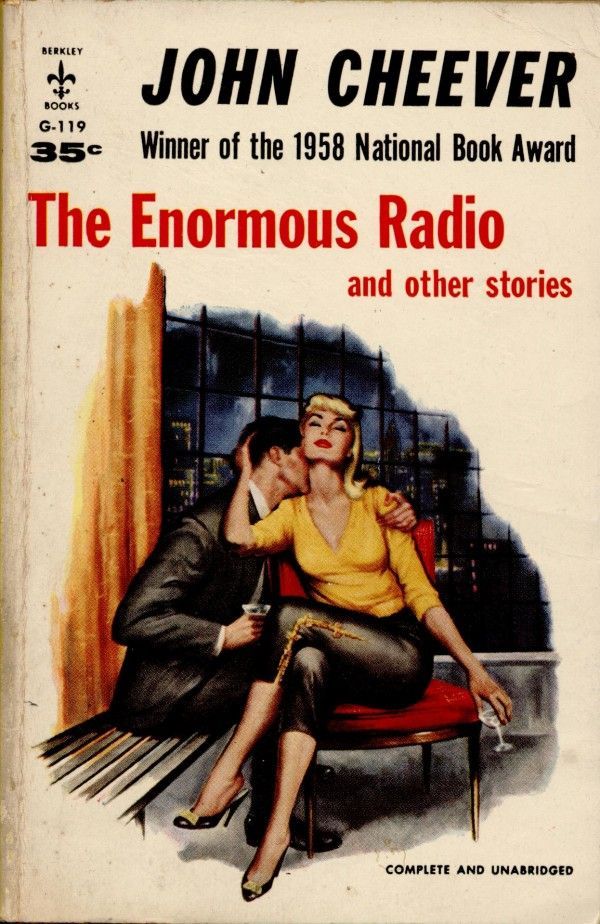
  • The role of the short story in the history of American Literature and how Cheever and the magazine he published the most frequently in, the New Yorker, fit into this history. It was interesting to learn that several MFA (Master of Fine Arts) programs in writing call Cheever’s collected short stories the “Orange Bible,” and consider him to be at the height of short story craftsmanship. It was also interesting to learn from the facilitator that though Cheever is thought of as writing realistic stories, it is his surreal stories like “The Swimmer” or “The Enormous Radio” for which he is best known.
  • Several reading group participants noted Cheever’s careful and skillful use of language and imagery in his writing. Together the reading group took a close look at key phrases and sentences in several stories. 
  • The group discussed if part of Cheever’s popularity was due in part to a bias toward New York centered fiction from both publishers and literary award committees.
  • The group further discussed the literature of the postwar suburbs and how Cheever fit into this tradition. Other important works about the suburbs of 1950s America, such as Sloan Wilson’s The Man in the Gray Flannel Suit, Richard Yates’s Revolutionary Road, and the New Yorker short stories of John Updike, were discussed and were on the book truck display during the meeting. 
What did you find most interesting about the third meeting’s discussion or about the short stories? Please post in the comments below.


Tuesday, October 11, 2016

Questions for Donnelly Library's Discussion of the Stories of John Cheever

Donnelly Library’s Pulitzer Prize Challenge reading group has its third meeting on Thursday, October 13. Below are a few questions to think about for the upcoming discussion.

Take a look at the questions and please post your own questions or discussion points for these short stories in the comments below.

Questions
  1. The Pulitzer Prize for fiction is awarded to a book "preferably dealing with American life." What do Cheever's short stories say about American life? What parts of the American experience do they draw on?
  2. How reliable are the narrators of Cheever's stories? Do they tell the truth about their situations and the other characters in the stories?
  3. What do the characters in these short stories want? What is a happy ending in Cheever's stories? What are readers supposed to take away from these stories? 
  4. Why do Cheever's stories set in a particular place and time still resonate in 2016? What is the enduring appeal of stories of the suburbs? 


Tuesday, October 4, 2016

Intro to John Cheever and Questions for Goodbye, My Brother

Hello everyone!  I am writing this post as a brief biography and background about John Cheever and am giving you a few questions about the first story we are discussing.

John Cheever was born on May 27, 1912, in Quincy, Massachusetts. His father owned a shoe factory until he lost it due to the Great Depression of the 1930s (a time of severe economic hardship). His mother owned a gift shop and supported the family with the shop's profits.

The style of writing that John Cheever is known for follows the plot line:  the characters are good people who begin life with a sense of well-being and order. Later that order and well-being are stripped away and never quite fully restored.  These are themes that inundate a genre of literature known as "Cheever country."

In the end Cheever could not fit the image he carefully developed for himself— much like the fictional characters he created. John Cheever died of cancer on June 18, 1982.


By now you should have read the first story in The Stories of John Cheever.  In "Goodbye, My Brother," there are several themes:  paralysis, letting go, change, acceptance and denial.  These are all brought together in the story of a family.  Consider the following questions as you read or re-read the story:

1.  How does the house symbolize the relationship between family members?
2.  What do the wedding dress worn by Helen and the old football uniform worn by the narrator symbolize?

3.  What role does Lawrence play in the family?  What role does he play in the events of the story?
4.  Who changes in the story and who doesn't?  

Post your thoughts or questions if you have any about this story.  Stay tuned for more questions about "The Five-Forty-Eight." 

Wednesday, September 28, 2016

Reading The Stories of John Cheever at Donnelly Library, Las Vegas, NM

Donnelly Library’s Pulitzer Prize Challenge reading group has its third meeting on Thursday, October 13, 2016 to discuss The Stories of John Cheever by John Cheever.

The list of my (April's) top ten favorite stories so far is below. Brandon said "The Swimmer" is his favorite Cheever story of all time. What stories stood out to you from the collection? Post your favorite stories in the comments below. 

  1. Goodbye, My Brother, p. 3-21
  2. The Enormous Radio, p. 33-41
  3. The Sorrows of Gin, p. 198-209
  4. The Day the Pig Fell into the Well, p. 219-235
  5. The Five-Forty-Eight, p. 236-247
  6. The Housebreaker of Shady Hill, p. 253-269
  7. The Country Husband, p. 325-346
  8. The Angel of the Bridge, p. 490-497
  9. The Geometry of Love, p. 549-602
  10. The Swimmer, p. 603-612


Thursday, August 18, 2016

The Shorter Short Stories of John Cheever

Last Tuesday, Octavia Fellin Library in Gallup, New Mexico had its Pulitzer Discussion Group on "The Stories of John Cheever" and while there was some considerable disagreement about the content of the book, there was definitely one unifying belief between our readers: This book is too long.  And I can't really dispute that.  700 pages of short stories is a lot for the casual reader.  It's a lot for the advanced reader!

So after our discussion, I decided to "shorten" the collection a tad.  Largely based on the favorites (or occasional least favorites) of our readers, I've put together a list of 15 Must Read Short Stories from "The Stories of John Cheever."  If you are looking for a great book for your book club or discussion group, but this collection seems too daunting, try this, more manageable, selection...
  1. Goodbye, My Brother
  2. The Enormous Radio
  3. O City of Broken Dreams
  4. Christmas is a Sad Season for the Poor
  5. The Sorrows of Gin
  6. The Day the Pig Fell into the Well
  7. The Five-Forty-Eight
  8. The Duchess
  9. The Lowboy
  10. The Death of Justina
  11. Clementina
  12. The Brigadier and the Golf Widow
  13. An Educated American Woman
  14. The Swimmer
  15. The Fourth Alarm
The real benefit of trimming down the book is in the primary complaints I heard about the book from our readers: "It's too long," "All the stories started to blend together," and "I started to forget some of the stories."  These are the kind of statements that I dread hearing, and I know that our readers would have gotten more from less.  

To really appreciate Cheever, or any short story author, one needs to take their time and enjoy each story individually, like eating a nice desert.  I loved "The Stories of John Cheever," and I really wanted others to share that love.  But it got to be too much for our readers, like eating way too much of a nice desert.  It became hard to really enjoy the flavor.  A shorter list like the one above would be easier and more pleasant to digest for anyone interested in reading Cheever for their discussion group or book club.

Bon Appétit!

Monday, August 8, 2016

4 Big Questions for a John Cheever Discussion

I'm an optimist.  I believe that everyone who shows up to the Gallup Pulitzer Discussion Group will have read "The Stories of John Cheever," this 700-page collection, from beginning to end, retaining absolutely every story perfectly in their minds.  But what if...let's say... a couple people only get halfway through.  We all want them to participate in the discussion too.  While I have plenty of questions that pertain to individual stories, I'd like to share some of the broader topics, we'll address that will make it easier for everyone to get a turn.

   1. What does Cheever seem to think of the typical nuclear family?

It's probably not hard to guess how Cheever felt about the nuclear family. If you've read one story, you don't have to guess his feelings toward the upper-middle class and wealthy white world. But this is an opener. People that read even a single story can start citing sources and picking through details.

2. Do the families portrayed in John Cheever stories still exist today?

I've rephrased this question half-a-dozen times in my head, and I'll probably do it a dozen times more before the discussion. What I'm trying to get at: Cheever's works really have a specific feel, a specific time, a specific place. Husbands all have mistresses and wives are all trapped at home. Perhaps some readers will think family structures have changed to no longer reflect the ones in his stories. Perhaps some readers will think they have not.

3. How are male-female relationships portrayed?

All general questions have a million-billion specific ones that can follow, and this one, in particular, can branch out in a million-billion different directions. Perhaps, because I am a man, I found the way Cheever writes men particularly fascinating. Our masculine protagonists are ignorant of their families, constantly cheating on their spouses, failing at work, and irritated by the tiniest of domestic issues, almost without exception. Women can be just as horrible in his tales, but they usually live like caged birds. I'd love to know how other readers felt about these two groups and how/why they clashed against each other.

4. How does the evolution of technology affect the people in these stories?

This is kind of an odd one, but John Cheever's stories take place when a whole lot of new/advancing technologies were drastically changing the world. A few examples I can think of are in The Enormous Radio, The Swimmer, and The Brigadier and the Golf Widow. Do radios, and swimming pools, and bomb shelters (and nuclear bombs!) change relationships and outlooks of people, and in what ways?

So these are four questions that can easily be used to boost discussions of John Cheever's works. They should function pretty well for those who finished the book, those who got halfway through, and those who jumped around, reading the stories that sucked them in, and skipping those that didn't.

Wednesday, June 1, 2016

Short Stories: "Something of a Bum"

To call an American writer a master of the short story can be taken at best as faint praise, or at worst as an insult... (In Praise of the American Short Story)
Although he earned the highest praise for his short stories, John Cheever was the first to admit that this writing form is considered "something of a bum." Cheever was lucky enough to write (and thrive as a writer) during a time when scads of magazines published short fiction. But today, most of those literary periodicals have vanished, and short stories have come to be seen as preludes to "real" writing.
...I told non-writer friends that my book was a short story collection they were congratulatory but fervent in their expressed hopes that I would someday, finally, write a novel. (Let us Now Praise Famous Short Story Writers and Demand that They Write a Novel)
What does the short story offer that novels don't? One reviewer suggests that short stories are much more like life, where we glimpse the lives of others for a brief span, before the relentless tide of our lives sweeps us apart.  
The imperial ambitions of a certain kind of swaggering, self-important American novel — to comprehend the totality of modern life, to limn the social, existential, sexual and political strivings of its citizens — start to seem misguided and buffoonish. More of life is glimpsed, and glimpsed more clearly, through Barthelme’s fragments, Cheever’s finely ground lenses or the pinhole camera of O’Connor’s crystalline prose. 
As we move on from The Stories of John Cheever  to Joyce Carol Oates' collection, Lovely, Dark, Deep, it may help to keep in mind that these two art forms are separate but equal. The relationships a reader develops with a novel may be akin to becoming best friends, but in the words of one Pulitzer Dialogues participant,
You can not only meet acquaintances but also find lifelong friends in short stories. Or at least wonder about them for a long time.

Tuesday, May 24, 2016

The power of literature and writing

John Cheever seems to put a tremendous amount of faith in the power of writing and in the power of literature. Do you agree? To what extent do you think Cheever was able to make sense of his own life with his dozens of stories about suburban disaffection?

Did you find any of Cheever's stories inspiring or alleviating despair? Could they save the world?

Friday, May 20, 2016

Top Five Favorites?

     Reading discussion groups in Las Cruces and Clovis have been talking about John Cheever. With over 60 stories in the book and limited time for discussion, facilitators have had to pick and choose. Las Cruces readers chose to discuss on "The Enormous Radio", "The Swimmer", "Goodbye, My Brother" "The Death of Justina," "The Day the Pig Fell into the Well," and "Artemis, the Honest Well Digger."

In Clovis,  readers focused on "Torch Song," "The Wrysons," and "The Children." NMHC staff favorites so far (we're still reading!!) include "The City of Broken Dreams," "The Death of Justina," and "A Miscellany of Characters That Will Not Appear." 

What are your favorites? Can you pick five?

Monday, May 16, 2016

Lighting Candles in the Vale of Tears

John and Mary Cheever
John Cheever once flippantly stated that "Everything I write is autobiographical." While this is clearly not true, he does draw deeply from his own troubled life, from his childhood to his "intolerable" marriage. 

Even if you haven't read Cheever: A Life by Blake Bailey, take the time to read this fantastic article from the London Review of Books. The puzzles of the stories become clear, from the desperation of the husbands afraid of intellectual wives to the pettiness of suburbanites competing for social status, not to mention the alcoholism, the uncaring sexuality, and the cold relationships between parents and their children (of his own son Federico, Cheever wrote, "I have no freedom from him").

After reading this article, you may be inspired to pick up his biography after all. Can it be possible that the story of John Cheever is even more compelling than the Stories of John Cheever?

Click here for Colm Toibin's review

Our Book Discussion of "The Stories of John Cheever" - May 12

We had our book discussion and heartily discussed the stories we read.   We discussed:
"The Enormous Radio", "The Swimmer", "Goodbye, My Brother" "The Death of Justina" and many more.  When the stories ended, we all kept thinking how the story would continue on.  Some of our group was able to read several stories although not the whole book.  We had plenty to talk about though.  There were two stories that one of our readers said was funny: "The Day the Pig Fell into the Well" and "Artemis, the Honest Well Digger".  We all admitted that we would need to read these stories and more that we discussed in the book discussion.
I will post more about our discussion in the next couple of days. 
Our next book discussion will be on June 9, "The Plague of Doves" by Louise Erdrich.
Please feel free to add your comments below.
 

Tuesday, May 10, 2016

Time and Place in John Cheever's Stories


Slowly coming to the end of the long journey that has been the Stories of John Cheever. Cheever takes his readers to a unique place in space and time that may feel incredibly foreign to New Mexico readers-- a land of servants, summer houses, elite boarding schools and malcontent, stay-at-home wives.

It's been fun imagining how these stories were told if they were about New Mexicans instead of New Yorkers. What would be different? A cabin in the Jemez would have such a different feel than the rental in "The Seaside Houses" but it's just as easy to imagine how such a cabin would embody the failed hopes and dreams of the family that owned it.

What would be different in these stories if the characters and settings were New Mexican? Would they be more hopeful overall or are the kinds of people and situations that Cheever writes about more universal?

Friday, May 6, 2016

Favorite John Cheever Quotations


What's your favorite John Cheever quotation?

Here's one I think speaks to many of his stories: "...we were all three characters in some bitter and sordid tragedy, carrying impossible burdens and separated from the rest of mankind by our misfortunes."

So many of Cheever's characters seem to feel this. Is this common or like so many other things in Cheever's stories, have the times changed enough that we no longer have to suffer this kind of isolation?

Thursday, May 5, 2016

Discussion Questions: The Stories of John Cheever by John Cheever


We are just two weeks away from our first Pulitzer discussion!  A few sample questions are listed below.  If you would like more discussion questions, click on the Thomas Branigan Memorial tab. If you have questions or thoughts about any of the stories in the book post them in the comment section or bring them to our meeting.

“Torch Song”

  1. Why is the title “Torch Song”?
  2. How does the narrator describe Joan?
  3. Why does the narrator omit the names of women that Jack dates or marries?
  4. What is the significance of the last paragraph in the story?

“The Wrysons”

  1. Why is Irene always dreaming about the hydrogen bomb?
  2. Why does Donald secretly bake cakes?
  3. The Wrysons are described as incapable of grasping life’s complexities. Is this description accurate?

“The Children”

  1. Does your opinion of Victor and Theresa change as the story progresses?
  2. Does Violet’s perception of her parents influence your perception of them?
  3. How does Mr. Matherly shape Victor’s character?

Tuesday, April 26, 2016

"The Stories of John Cheever"

Hello Reading Challenge Participants!

Our next book discussion is “The Stories of John Cheever” to be held on Thursday, May 12th at the Branigan Library Board Room @ 2:00pm. 

There are sixty-one stories, so we may have to choose a few to discuss and then continue by discussing the book as a whole... We can choose our favorites to discuss.  In the pdf file link below are questions for the "The Enormous Radio", "The Swimmer" and some general questions about "The Stories of John Cheever".  

On Learning to Appreciate John Cheever's Stories
http://www.npr.org/templates/story/story.php?storyId=5652619

John Cheever short stories:
Discussion Questions


"As stories go, as compellingly readable narratives of a certainsort of people in a certain time and place—our time and place—John Cheever's stories are, simply, the best." —The Washington Post

"Profound and daring...some of the most wonderful stories any American has written." —The Boston Globe

"Not merely the publishing event of the 'season' but a grand occasion in English literature." —The New York Times